Technology diffusion & absorptive learning
When do imported technologies generate domestic learning, upgrading and sustained productivity—rather than low-value assembly?
Africa ↔ Asia · Growth · Technology
Research on how trade, investment, institutions and new technologies become productive capabilities—and better livelihoods—in developing economies.

Africa–Asia development relations viewed through capabilities, production structures and long-run growth.
Research agenda
A connected agenda: from the arrival of a technology or investment to the local capabilities that determine who benefits.
When do imported technologies generate domestic learning, upgrading and sustained productivity—rather than low-value assembly?
How the composition of trade, foreign investment and development cooperation shapes African growth, industrialization and policy space.
Which combinations of skills, management, digital infrastructure and organization allow firms in developing economies to convert AI access into broad-based gains?
Why the maintenance of physical and human capital—and the institutions behind it—can matter as much as new investment for durable development.
Development outcomes emerge from complementarities—not isolated inputs.
What local capability is the binding constraint?
Does external engagement alter the structure of production—or only its scale?
Which institutions convert a short-run opportunity into persistent growth?
Selected current work
Projects span firm-level evidence, macroeconomic mechanisms and the institutional history of South–South cooperation.
A firm-level inquiry into the digital, human-capital, managerial and organizational foundations of meaningful AI adoption across Africa.
Examining whether China’s trade and investment engagement jointly expands productive employment in African manufacturing—or instead generates enclave growth.
Investigating why access to advanced machinery does not automatically move an economy beyond assembly, and which forms of learning unlock upgrading.
Tracing how an Afro-Asian political vision became institutionalized through competing and complementary development platforms led by Japan and China.
Latest book · 2026
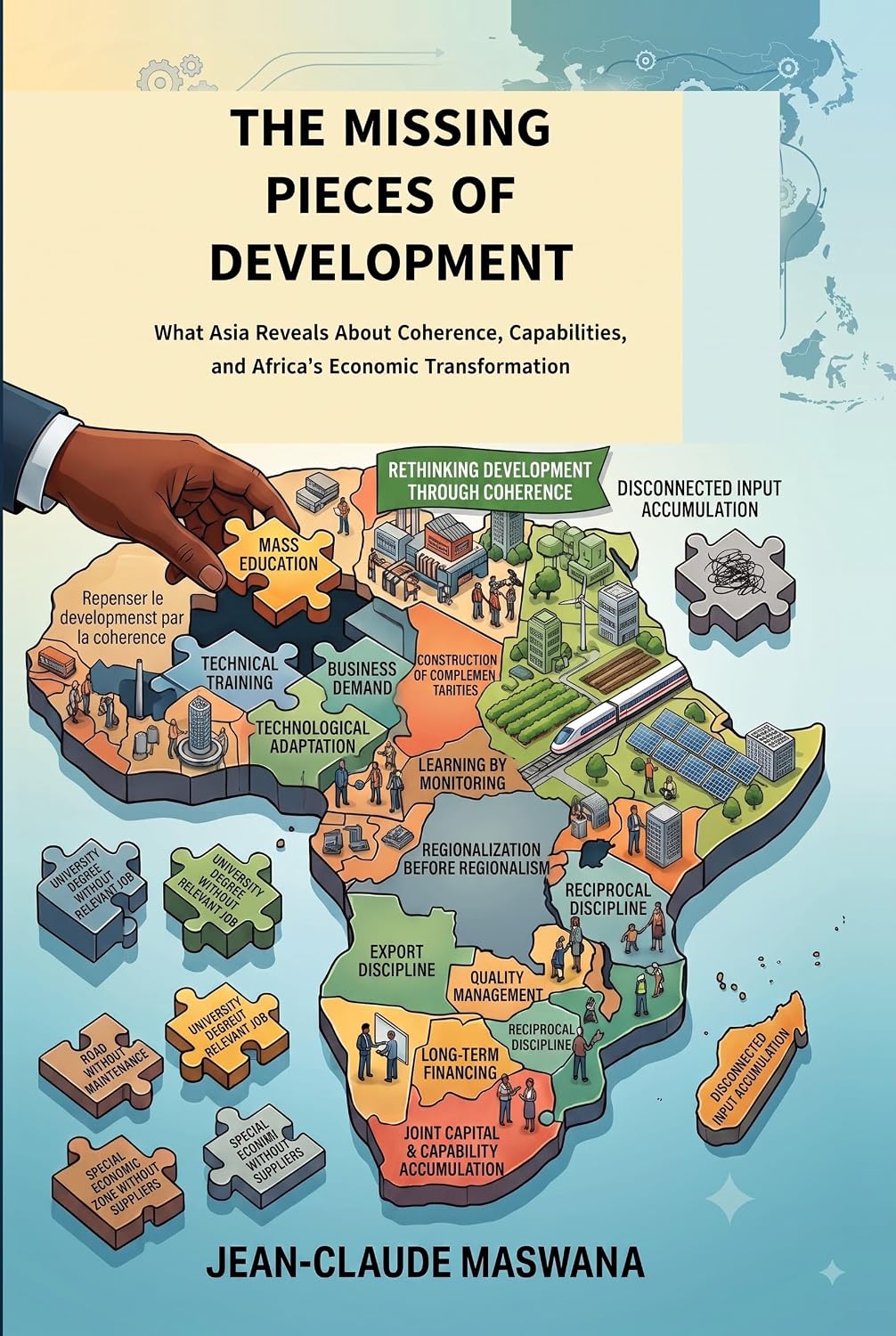
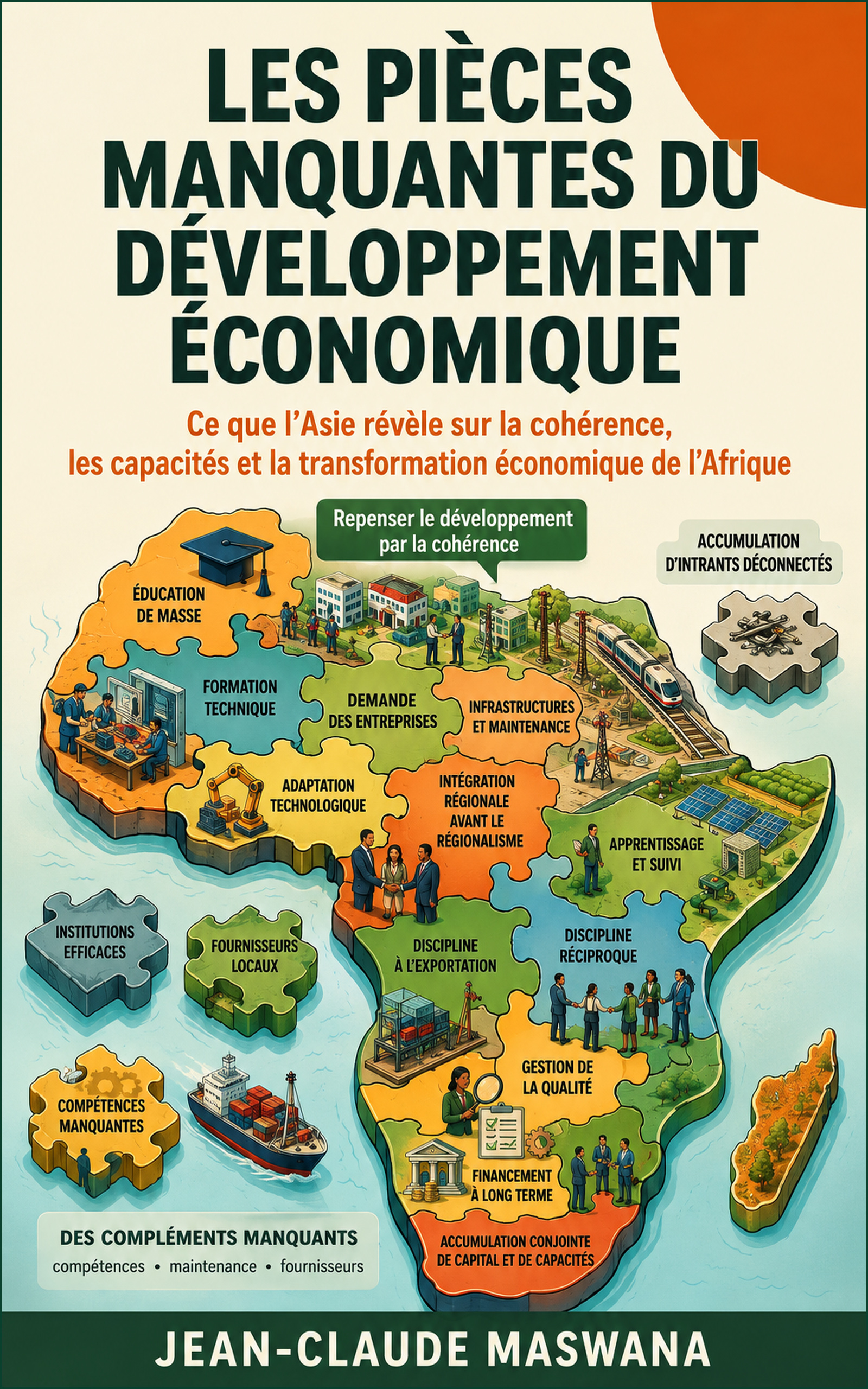
What Asia reveals about coherence, capabilities, and Africa’s economic transformation
Why do countries accumulate roads, universities, technology and foreign investment yet fail to transform? The book argues that the missing element is coherence: capabilities, institutions, finance, learning and productive assets must reinforce one another.
Analytical approach
Theory and evidence are used as mutual discipline: each sharpens what the other can credibly claim.
Theory disciplines measurement; evidence disciplines theory.
The objective is not methodological ornament. It is to distinguish scale effects from structural change, correlation from mechanism, and adoption from effective use.
Solow–Swan, augmented human-capital models, endogenous and semi-endogenous growth, technology diffusion, CES production and threshold mechanisms.
Panel estimators, instrumental variables, dynamic panels, event-study designs, spatial dependence and robust long-run estimation.
Country panels, firm surveys, bilateral trade structures, foreign investment, institutional indicators and geospatial proxies assembled for reproducible analysis.
Selected contributions
Representative contributions from a broader body of work on Africa’s development and its economic relations with Asia.
Research purpose
Capital, technology and market access create possibilities. Capabilities, institutions and productive learning determine whether those possibilities become shared prosperity.